ADAPTOME: Coral ADAPTation to Environmental change Multi-omics analysis of host-microbiOME interactions
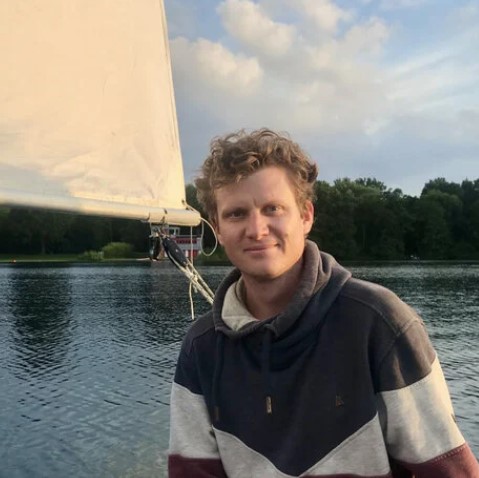
Dans le cadre des Midis des Sciences Nature et Société du Département de biologie, chimie et géographie, Andreas Eich, étudiant au doctorat à École Pratique des Hautes Études (France) et Université Laval nous présentera : « ADAPTOME: Coral ADAPTation to Environmental change Multi-omics analysis of host-microbiOME interactions » le jeudi 22 janvier à 12 h au J-480. Cette conférence sera en anglais.
Andreas Eich travaille sur les mécanismes moléculaires biologiques qui sous-tendent la tolérance thermique des coraux. Avant son doctorat, il a obtenu un master en écologie marine tropicale à l’université de Brême (Allemagne) et a étudié les interactions entre les coraux et les algues aux Fidji. Il a ensuite travaillé chez HYDRA Marine Sciences sur la biodégradation des plastiques biodégradables dans l’environnement. Pour son doctorat, il s’est installé en Polynésie française afin d’effectuer des travaux de terrain au laboratoire CRIOBE et a séjourné à l’Institut de biologie intégrative et des systèmes de Québec pour réaliser des analyses en laboratoire. Ses superviseur.es sont Caroline Dubé (Université de la Polynésie française), Laetitia Hédouin (CNRS, France) et Nicolas Derome (IBIS & ULaval, Canada).
Résumé : Coral reefs are critical for biodiversity, coastal protection, and food security, but are among the most vulnerable ecosystems to climate change. More frequent and intense marine heat waves can cause coral bleaching, a breakdown of the symbiosis between corals and dinoflagellates, leading to host starvation and ultimately death. Coral thermotolerance varies between and within coral species and depends on interactions between all members of the coral holobiont (the cnidarian host, bacteria, Symbiodiniaceae dinoflagellates). To better understand the resilience of corals to climate change, it is therefore essential to evaluate the contributions of each compartment to coral thermotolerance. In my PhD, I investigated the molecular mechanisms of coral thermotolerance and the effects of prior exposure to heat stress. The reefs of Mo’orea (French Polynesia) provide a unique natural laboratory: massive mortality occurred during the 2019 bleaching event, followed by a smaller event in 2024. This repeated thermal stress allowed us to test in situ the hypothesis that pre-exposure to thermal stress (corals that survived the 2019 bleaching event) will significantly increase the thermotolerance and survival of corals during the following bleaching event of 2024. My research aims to disentangle the dynamics of coral-algae-microbe interactions in response to heat stress through integrative multi-omics analyses. I will first present patterns of mortality and recovery after the 2019 bleaching event as the ecological foundation for the molecular work in which I explore the relative contribution of the coral genome and the association with bacteria and Symbiodiniaceae.
Pour s’inscrire à la conférence : https://uqar.zoom.us/webinar/register/WN_tNyjQvVvTSyG_GZGM15-4A