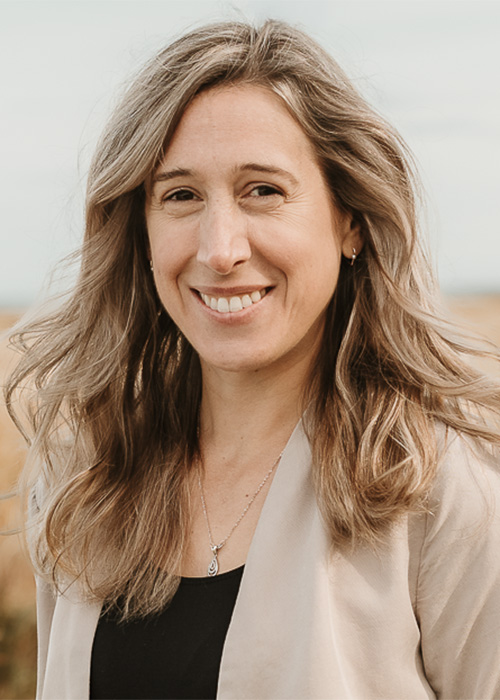
Joanie Van de Walle
- Biologie
- Écologie animale
- Dynamique de population
- Histoire de vie
- Écologie évolutive
- Gestion et conservation de la faune
- Mammifères marins
• Post-doc Woods Hole Oceanographic Institution (2023)
• Ph.D. Université de Sherbrooke (2020)
• M.Sc. Université Laval (2013)
• B.Sc. Université Laval (2009)
Mon programme de recherche se décline en deux objectifs principaux :
1) Étudier les stratégies de reproduction et d’histoire de vie des populations animales ainsi que les pressions sélectives qui s’exercent sur elles.
2) Quantifier et prédire les conséquences individuelles et populationnelles des changements environnementaux et des variations dans les stratégies de reproduction.
Mes recherches combinent l’analyse empirique et l’exploration théorique d’hypothèses écologiques et évolutives sur un large éventail d’espèces animales (emphase actuelle sur les mammifères marins). Je me penche sur des problématiques autant théoriques qu’appliquées. Mes objectifs sont réalisés grâce à l’utilisation de jeux de données à long-terme sur des individus marqués, des suivis temporels de populations, de la modélisation mathématique et statistique de dynamique de population, ainsi qu’une vaste gamme d’outils démographiques.
À venir
À venir
À venir
- Tinker, M. T., G. B. Stenson, A. Mosnier, J. Van de Walle, S. L. C. Lang, et M. O. Hammill. Sous presse. Drivers of population dynamics and juvenile mortality in northwest Atlantic harp seals. Ecological Applications.
- Lang, S. L. C., C. E. den Heyer, G. B. Stenson, M. O. Hammill, J. Van de Walle, et C. D. Hamilton. Sous presse. Review of the Atlantic Seal Management Strategy Precautionary Approach framework. DFO Canadian Science Advisory Sector Research Document. 2025/nnn. iv + 23p.
- Rouby, E., J. Van de Walle, F. Plard, K. Delord, L. M. Aubry, C. Barbraud, T. Bonnet, H. Weimerskirch, et S. Jenouvrier. En révision. Sex-specific recruitment dynamics in the wandering albatross (Diomedea exulans): interplay of natal conditions, density dependence, and mate availability. Journal of Animal Ecology.
- Van de Walle, J., S. van Daalen, S. C. Patrick, C. Barbraud, K. Delord, H. Weimerskirch, J. Thorley, et S. Jenouvrier. En révision. Linking differences in personality to demography in the wandering albatross. Oikos.
- Van de Walle, J., M. T. Tinker, et C. Sauvé. 2025. An Integrated Population Model for the Belcher-Islands – Eastern Hudson Bay (BEL-EHB) beluga stock. DFO Canadian Science Advisory Sector Research Document. 2025/057. iv + 58p.
- Van de Walle, J., Tinker, M.T., Lang, S.L.C., Stenson, G.B., and Hammill, M.O. 2025. Abundance Estimate of Northwest Atlantic Harp Seals, Pagophilus groenlandicus, and Harvest Advice for 2025-2029. DFO Can. Sci. Advis. Sec. Res. Doc. 2025/070. v + 56 p.
- Van de Walle, J., Tinker, M.T., and Sauvé, C. 2025. Abundance Estimate and Harvest Impacts on Belcher Islands-Eastern Hudson Bay and James Bay Beluga: 2024 Update. DFO Can. Sci. Advis. Sec. Res. Doc. 2025/056. v + 66 p.
- Van de Walle, J., S. Jenouvrier, T. Bonnet, et J. Garnier. 2025. Toward a unified approach to modeling adaptation among demographers and evolutionary ecologists. Methods in Ecology and Evolution, 16:1644-1657.
- Laberge, A. J., X. Bordeleau, J. Van de Walle, M. O. Hammill, et F. Pelletier. 2025. Neonatal growth patterns, sexual dimorphism, and compensatory growth in harbour seal pups. Marine Ecology Progress Series, 761 :129-143.
- Laberge, A. J., P.-O. Cusson, J. Van de Walle, X. Bordeleau, M. O. Hammill, et F. Pelletier. Accuracy and precision of an umbilical-based method for estimating birthdates of pre-weaned harbour seal pups. Wildlife Society Bulletin, 49 :e1582.
- Van de Walle, J., R. Sun, R. Fay, S. Patrick, C. Barbraud, K. Delord, H. Weimerskirch, et S. Jenouvrier. 2024. The impact of boldness on demographic rates and life-history outcomes in the wandering albatross. Journal of Animal Ecology, 93: 676-690.
- Pelletier, F., P. Dumont, J. Van de Walle, D. Jauvin, et D. Rodrigue. 2024. Cadre législatif québécois pour la protection des espèces sauvages en situation précaire : évaluation critique et recommandations pour une révision majeure. FACETS, 9 :1-14.
- Van de Walle, J., R. Fay, J.-M. Gaillard, F. Pelletier, S. Hamel, M. Gamelon, C. Barbraud, F. G. Blanchet, D. T. Blumstein, A. Charmantier, […], et S. Jenouvrier. 2023. Individual life histories: neither slow, nor fast, just diverse. Proceedings of the royal Society B, 290: DOI :10.1098/rspb.2023.0511.
- Renaud, L.-A., J. Van de Walle, G. Pigeon, X. Bordeleau, M. O. Hammill, et F. Pelletier. 2023. Spatiotemporal variation in population abundance and pre-weaning suvival of harbor seals (Phoca vitulina) in the St. Lawrence Estuary, Canada. Canadian Journal of Zoology, DOI: 10.1139/cjz-2023-0005.
- Lassis, R., M. Festa-Bianchet, J. Van de Walle, et F. Pelletier. 2023. Genetic rescue from protected areas is modulated by migration, hunting rate, and timing of harvest. Evolutionary Applications, 16:1105-1118.
- Van de Walle, J., B. Larue, G. Pigeon, et F. Pelletier. 2022. Different proxies, different stories? Imperfect correlations and different determinants of fitness in bighorn sheep. Ecology and Evolution, 12: e9582.
- Sun, R., J. Van de Walle, S. Patrick, C. Barbraud, H. Weimerskirch, K. Delord, et S. Jenouvrier 2022. Boldness predicts divorce rates in wandering albatrosses (Diomedea exulans). Biology Letters, 18: 20220301.
- Van de Walle, J., F. Pelletier, A. Zedrosser, J. E. Swenson, S. Jenouvrier, et R. Bischof. 2021. The interplay between hunting rate, hunting selectivity, and reproductive strategies shapes population dynamics of a large carnivore. Evolutionary Applications, 14:2414-2432 (DOI: 10.1111/eva.13253).
- Van de Walle, J., A. Zedrosser, J. E. Swenson, et F. Pelletier. 2021. Disentangling direct and indirect determinants of the duration of maternal care: environmental context matters. Journal of Animal Ecology, 90:376-386 (DOI: 10.1111/1365-2656.13371).
- Van de Walle, J., A. Zedrosser, J. E. Swenson, et F. Pelletier. 2020. Trade-off between offspring size and number: the smallest bear the cost. Biology Letters, 16:20190707 (DOI: 10.1098/rsbl.2019.0707).
- Van de Walle, J., M. Leclerc, S. M. J. G. Steyaert, A. Zedrosser, J. E. Swenson, et F. Pelletier. 2019. Proximity to humans is associated with longer maternal care in brown bears. Behavioral Ecology and Sociobiology, 73:158 (DOI : 10.1007/s00265-019-2764-y).
- Gossieaux, P., M. Leclerc, J. Van de Walle, Y. Poisson, P. Toni, J. Landes, A. Bourret, D. Garant, F. Pelletier, et M. Bélisle. 2019. Offspring mass variation in tree swallows: a case of bet-hedging? Ecosphere, 10:e02607 (DOI : 10.1002/ecs2.2607).
- Van de Walle, J., G. Pigeon, A. Zedrosser, J. E. Swenson, et F. Pelletier. 2018. Hunting regulation favors slow life histories in a large carnivore. Nature Communications, 9:1100 (DOI: 10.1038/s41467-018-03506-3).
- Frank, S., A. Ordiz, J. Gosselin, A. Hertel, J. Kindberg, M. Leclerc, F. Pelletier, S. M. J. G. Steyaert, O.-G. StØen, J. Van de Walle, A. Zedrosser, et J. E. Swenson. 2017. Indirect effects of bear hunting: a review from Scandinavia. Ursus, 28:150-164 (DOI: 10.2192/URSU-D-16-00028.1).
- Leclerc, M., J. Van de Walle, A. Zedrosser, J. E. Swenson, et F. Pelletier. 2016. Can hunting data be used to estimate unbiased parameter estimates? A case study on brown bears. Biology Letters, 12:20160197 (DOI: 10.1098/rsbl.2016.0197).
- Sauvé, C., J. Van de Walle, M. O. Hamill, J. P. Y. Arnould, et G. Beauplet. 2014. Stomach temperature records reveals nursing behaviour and transition to solid food consumption in an unweaned mammal, the harbour seal pup (Phoca vitulina). PLoS ONE, 9:e90329 (DOI : 10.1371/journal.pone.0090329).
- Van de Walle, J., et B. Leblanc. 2020. La grande ourse et ses petits. Bande-dessinée. (http://gensenblouseblanche.blogspot.com).
- Van de Walle, J. 2019. Des oursons comme bouclier. Université de Sherbrooke (https://www.usherbrooke.ca/actualites/nouvelles/actualites/actualites-details/article/40652/).
Articles de presse et entrevues médias
- La Semaine Verte. « Le phoque du Groenland, victime du climat ». 2025. (Émission de télévision). Lien
- Le Journal de Montréal. « Bas-Saint-Laurent : des centaines de phoques visibles de la 132 ». 2025. (Reportage de télévision). Lien
- CFIM. « Le cheptel de phoques du Groenland est en déclin ». (Émission de radio et nouvelle journalistique). Lien
- Radio-Canada. « Sans glaces, où les phoques du Groenland donnent-ils naissance cet hiver? ». 2024. (Émission de radio). Lien
- LaTribune, « Les défis de gestion de la faune à l’ère de l’Anthropocène », 2021. (Nouvelle journalistique). Lien
- L’Actualité, “Les ourses s’approcheraient des humains pour protéger leurs petits”, Canada, 2019. (Nouvelle journalistique publiée en ligne). Lien
- CBC, “Bears letting cubs stay home longer to avoid hunters”, Canada, 2018. (Nouvelle journalistique publiée en ligne). Lien
- National Geographic, “Bears Are Caring for Their Cubs Longer in Response to Hunting”, États-Unis, 2018. (Nouvelle journalistique publiée en ligne). Lien
- Cosmos Magazine, “Mama bears foil hunters by keeping babies close”, Australie, 2018. (Nouvelle journalistique dans un magazine).
- Scientific American, “Hunting Rules Have Changed Mama Bear Care”, États-Unis, 2018. (Balladodiffusion en ligne). Lien
- BBC Radio 4/Inside Science, “Genes and education, John Goodenough, Caring bears and hunting”, Royaume-Uni, 2018. (Entrevue radiophonique et balladodiffusion en ligne). Lien